
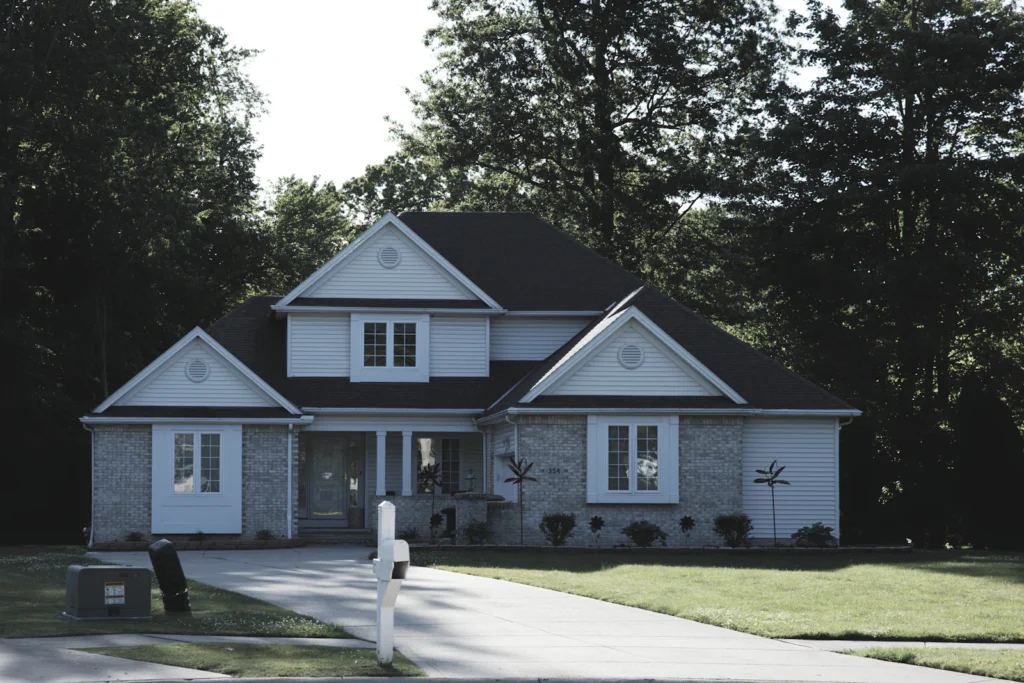
Fiber Cement Siding in New Jersey
General information on fiber cement siding: what it is, how it differs from vinyl and wood, and what repair and installation involve, so you can decide if it fits your home.
NJ HIC #13VH12036000 | Serving homeowners across New Jersey from East Rutherford
- Free inspection & estimateNo-cost first visit
- NJ HIC #13VH12036000Registered Home Improvement Contractor
- East Rutherford headquarters168 Humboldt St
- Convenient online schedulingRequest online, then pick a time
What fiber cement siding is
Fiber cement siding is a manufactured cladding made mostly of cement, sand and cellulose fibers. It is formed into boards, panels and shingles, often with a wood-grain or smooth texture, and is typically either factory-finished or primed for painting on site.
Compared with vinyl, it is much heavier and more rigid, so it lies flat on the wall and holds crisp lines. Compared with wood, it does not rot in the same way. It still needs to be installed with proper clearances, flashing and sealed joints, and painted surfaces will need repainting over time.
Fiber cement also needs different handling. It is cut with tools and methods that control silica dust, fastened according to the manufacturer’s instructions, and installed with gaps and flashing at butt joints and trim.
Is it right for your house?
Fiber cement is one of several siding options we can discuss. It may suit homeowners who want the look of painted wood with less concern about rot. We talk through it alongside vinyl and wood, and help you weigh appearance, weight, cost and maintenance for your home.
Issues we see with fiber cement siding
Fiber cement is durable, but installation details and maintenance still matter.
Cracked or chipped boards
Impact, over-driven fasteners or movement can crack the brittle edges of boards.
Open butt joints
Joints without proper flashing or sealant can channel water behind the siding.
Too close to the ground
Boards in contact with soil, mulch, decks or roofing can wick moisture and deteriorate.
Peeling or worn paint
Painted surfaces weather, and exposed cut edges can absorb water if not sealed.
Missing flashing at trim
Trim and window heads without flashing let water run behind the boards.
Damaged trim
Wood trim around fiber cement can rot even when the siding itself is sound.
Repairing fiber cement or replacing it
Because fiber cement boards are individual pieces, many problems can be handled locally.
When repair usually works
- A few cracked or broken boards
- Joint and sealant problems in one area
- Paint wear that can be prepped and recoated
- Wall behind the siding dry and sound
When a broader approach may be needed
- Moisture damage behind many boards
- Installation errors repeated across walls
- Widespread cracking from poor fastening
- Planned change to a different siding material
Factors that affect the decision
How many boards are affected, whether the problem comes from installation details, the condition of the wall behind, and whether matching texture and finish are available.
When further investigation is needed
If water has been getting in at joints or trim, the sheathing behind may be affected. We explain what removing a few boards to check would involve.
How fiber cement work is approached
Request
Send the form with photos of the siding, or call or text us.
Evaluate
We look at boards, joints, clearances, trim and flashing.
Discuss options
We explain repair or replacement options and how fiber cement compares.
Estimate
You receive a clear scope and estimate.
Work carefully
Boards are cut with dust control, fastened and flashed as the product requires.
Finish & review
Repaired areas are sealed and prepared for finishing, then reviewed with you.
Finishing details, such as paint matching, depend on the existing siding. We discuss them before the work is scheduled.
How fiber cement compares
General comparisons to help you think through materials. Specifics depend on the product and installation.
Fiber cement
Heavy and rigid with crisp lines. Does not rot like wood, but needs flashed joints and painted surfaces need upkeep.
Vinyl
Lighter and does not need painting. Moves with temperature and can be easier to repair panel by panel.
Wood
Traditional and natural-looking. Needs regular painting or staining and protection from moisture.
Trim choices
Fiber cement, wood and other trim materials each behave differently and are discussed with the siding.

What Our Customers Say
We have not yet received Google reviews about fiber cement siding specifically. The first two are genuine Google reviews about our siding work; the third is about our work in general.
“Very friendly, clean and quick work replacing some siding for us.”
Excerpt“A piece of siding came off of my house and Matt and Rob were extremely responsive to my request, came out out the same day and made the repairs quickly and efficiently.”
Excerpt“They took the time to walk me through everything in a straightforward, honest way, which made the whole process stress-free. The cost was reasonable and upfront—no unexpected charges or pushy sales tactics.”
Quoted from our Google Business Profile. Rating and count as of October 28, 2026.
Fiber cement siding help in New Jersey
We look at fiber cement siding for homeowners statewide from our East Rutherford headquarters. Select a county or view every area we cover.
Headquarters
168 Humboldt St, East Rutherford, NJ 07073
(551) 241-0470 · monarchroofingnj@gmail.com
Service availability can vary by location and schedule. See all service areas.
Fiber cement siding FAQs
What is fiber cement siding made of?
Mostly cement, sand and cellulose fibers, pressed into boards, panels or shingles. Exact formulas vary by manufacturer.
Is fiber cement better than vinyl?
Neither is better in every case. Fiber cement is heavier and more rigid with a painted-wood look; vinyl is lighter and does not need painting. We help you compare for your house.
Does fiber cement siding need painting?
Painted surfaces will eventually need repainting. Some boards come factory-finished, others are primed for painting after installation.
Can a cracked fiber cement board be replaced?
Usually, yes. The damaged board can be cut out and a new one installed, then sealed and finished to blend in.
Why is dust control important?
Cutting fiber cement can release crystalline silica dust, which is a health hazard. It should be cut with suitable tools and dust control.
Can fiber cement get wet behind the siding?
Yes, if joints, trim or openings are not flashed correctly. The barrier and flashing behind it matter as much as with any siding.
Does fiber cement need special installation?
It needs specific fastening, clearances and joint details, generally set out in the manufacturer’s instructions. Following them affects how it performs.
Which brands do you install?
We do not claim a partnership with any manufacturer. If you are considering fiber cement, we can discuss available products and what fits your project.
Request Your Free Siding Estimate
Tell us about your project, upload photos if available, and choose your preferred inspection date and time.
Please note: preferred dates and times are requests until your booking is confirmed.
Prefer to talk? Call or text (551) 241-0470 or email monarchroofingnj@gmail.com.
Considering Fiber Cement Siding?
Tell us about your home and what you are weighing up. We will start with a free visit and help you compare your options.